Train to Teach Biology
Programme: QTS & PGCE
Duration: 1 Year
Locations: Greater Manchester, Leeds, Bradford, Merseyside & Stoke-on-Trent
Available bursary: £5,000 tax free
Bring the living world to life and inspire the next generation of scientists.
Why train to teach Biology with us?
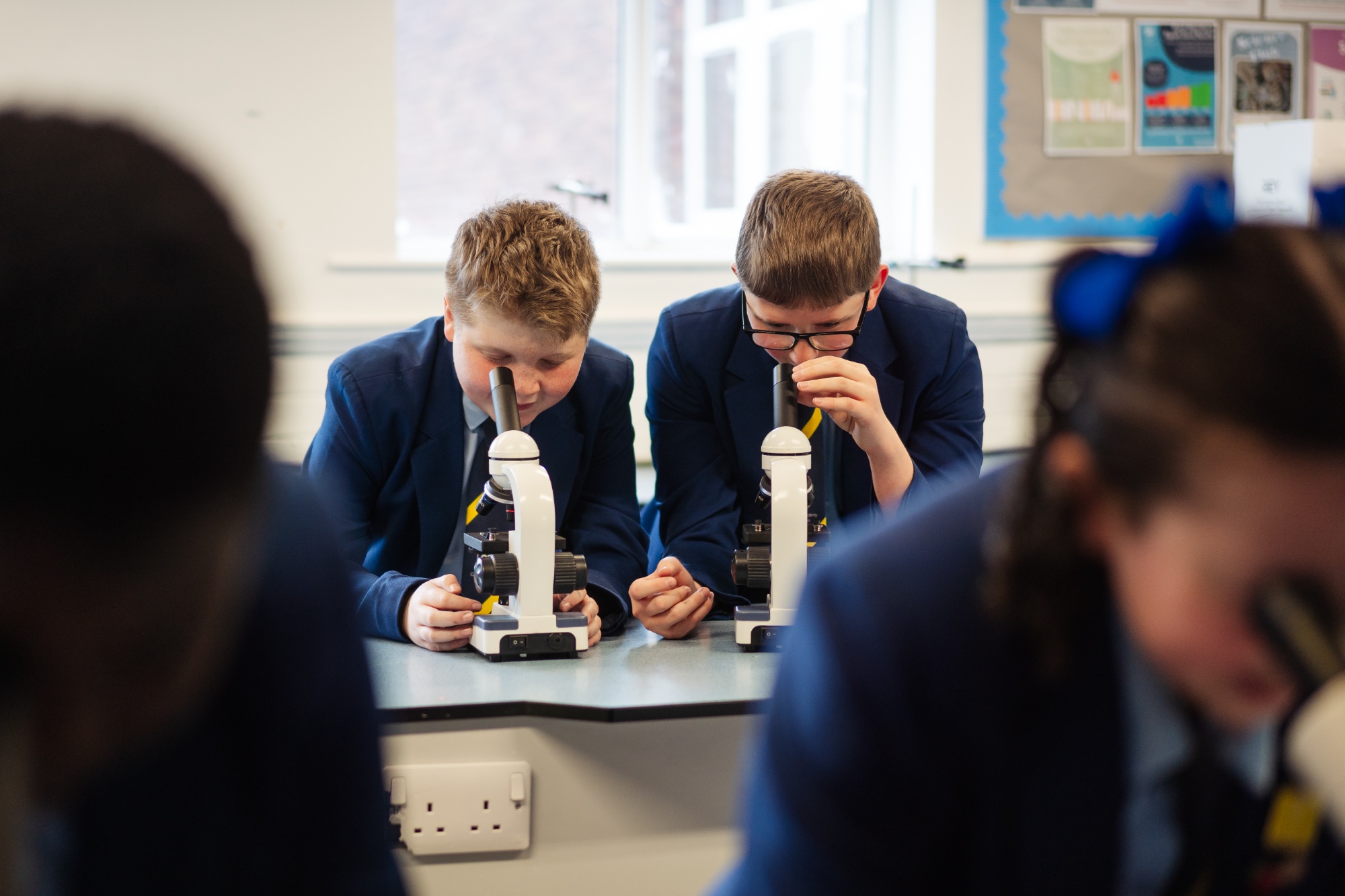
Biology helps young people make sense of the living world – from human health to climate change – and you will be the person who helps them see why it matters. As a Biology specialist, you will bring big ideas to life for pupils aged 11–16, using practical work, models and real-world examples to spark their curiosity.
On our secondary Science (Biology) route, you will not only deepen your Biology expertise but also learn how to teach all three sciences confidently across the curriculum. You will explore current debates in science education – from working scientifically to misconceptions and assessment – and apply what you learn directly in your classroom.
You will train in Co-op academies and partner schools that serve diverse communities across Greater Manchester, West Yorkshire, Merseyside and Staffordshire, so you can make a tangible difference where it is needed most. If you are looking for a career with social purpose, rooted in co-operative values and long-term support for your development, this is the place to begin.
You will be supported by expert science mentors, weekly subject and professional studies sessions, and our Learn, Explore, Apply approach, which helps you connect training-room ideas with everyday classroom practice. By the end of the year, you will be ready to start your first post as a qualified science teacher, with the confidence to keep growing throughout your career.
|
Gain QTS and a Master’s level PGCE in one year
|
Classroom based training from day one across our 38 academies | Structured support from trainee to ECT | Practical benefits that remove barriers |
|---|
What you will teach
Our Biology course sits within our secondary Science pathway, so you will train as a science teacher with a strong Biology specialism. You will develop secure Biology subject knowledge and learn how to teach all three sciences (Biology, Chemistry and Physics) to pupils aged 11–16, with opportunities to experience post‑16 teaching.
- Develop pupils’ understanding of key biological concepts such as cells, organisms, ecosystems and genetics.
- Use models, practical work and simulations safely and effectively to build scientific thinking and scientific literacy.
- Teach science for all learners, including those with SEND and high prior attainment, using adaptive teaching strategies so every pupil can succeed.
Your training year
Your training year is structured so that your confidence and responsibility build gradually over time, with clear expectations at each stage.
- Follow our phased curriculum (Introductory, Developmental, Consolidation) so your workload and teaching responsibilities increase in a manageable, supportive way.
- Revisit our five Learning Themes across the year: Building a Learning Culture, Planning for Learning, Purposeful Assessment, Thinking Professional and Developing Partnerships.
- Take part in Intensive Training & Practice (ITaP) on areas such as lesson starts, explicit instruction, scaffolding and questioning, then apply what you have learned directly in your classroom.
- Find out more in Our ITT curriculum and explore the full structure of the programme.
Professional studies and support
Alongside your subject-specific Biology and science input, you will join trainees from other subjects for our year‑long professional studies programme. This shared training helps you understand the bigger picture of teaching and life in schools, while still allowing for individual support.
Placement model
Most secondary trainees follow an A–B–A placement model: you start in your home school, move to a contrasting placement from January to Easter, then return to your home school for the summer term. This gives you the chance to see different contexts, leadership styles and cohorts while still having a clear “base” school community.
You also gain experience in KS2 and post‑16 settings, and in SEND provision across the Trust, so you understand key transition points and how to support a wide range of learners. These additional experiences are carefully timetabled so they add breadth without overwhelming your core placements.
Entry requirements and subject knowledge
You will normally need a degree with substantial Biology content, or a closely related discipline, along with a strong Level 3 qualification. A minimum of a 2:2 bachelor’s degree (or higher) is required.
You will also need at least grade 4/C in GCSE English and Mathematics, or equivalent.
We understand that not everyone feels confident in teaching every part of Science from the outset. Following a successful interview we work with each recruited trainee teacher to help them identify parts of their subject knowledge they will need to refresh or deepen, and provide free access to our online learning platform which will tailor learning around your needs.
Funding and bursaries
Tax‑free bursaries are usually available in Biology, depending on your degree background and the year you apply.
Visit our Financial incentives and support page and the Get Into Teaching website for the most up‑to‑date bursary information.
Ready to start your journey?
Find our courses on DfE Apply using our ITT provider code 2X4 and selecting Co‑op Academies Trust – Biology
Start your application today
Any questions?
Talk to our team and get the answers you need before you apply, email: pdi@coopacademies.co.uk
Your teaching journey starts here
Whether you’re changing careers or continuing your work in education, you’ll join a values‑driven Trust that invests in its trainees and early career teachers.
We’ll provide the training, support and community you need to succeed and progress in a rewarding teaching career with Co-op Academies Trust.